Friday, October 2, 2026. After four sessions of slow erosion, the dirham took a proper hit: in the day's most violent moves, the Moroccan currency lost about 1.45% against the euro, its sharpest single-session fall since the current slide began, with the euro trading as high as 11.19 dirhams intraday before the close settled around 11.09 MAD. The dollar leg did not wait: 1 USD = 9.80 dirhams, up from 9.62 at the start of the week. A Friday to remember on the foreign-exchange market.
The session in five numbers
Mid-market rates, October 2, 2026
What happened Friday
Two moves, one direction. Against the dollar, the dirham's decline was orderly but relentless: 9.62 on Monday, 9.71 on Tuesday, 9.80 by Friday, a weekly loss of about 1.9%, on top of the slide that began on Monday, September 28. Against the euro, the move compressed into one brutal session: from 11.01 dirhams per euro on Thursday to 11.09 at the close, with 11.19 touched intraday, the euro's strongest level against the MAD in weeks.
What 1 euro buys in dirhams
Daily mid-market rate, September 26 – October 2, 2026
What 1 US dollar buys in dirhams
Daily mid-market rate, September 26 – October 2, 2026
What drove the move
- Month-end dollar demand. Friday closed the month's books, and corporate demand for dollars, starting with the energy bill , concentrates on these sessions. With Brent near $95, importers' foreign-currency needs are structurally heavier than a year ago.
- US yields still near 4.7%. The 10-year Treasury holding around 4.7% keeps the dollar bid globally; for a currency whose basket is 40% dollar, the transmission to the MAD fixing is mechanical.
- A firm euro into the weekend. The euro found support against most emerging counterparts on Friday, and the dirham, anchored to a 60% euro basket, could not dodge the cross-current: EUR/MAD broke higher regardless of the dollar's own strength.
- Momentum. Four consecutive sessions of decline invited trend-following flows, a classic amplifier on a thin Friday market.
A managed slide, not a run
The framework has not changed: the dirham trades in a ±3% band around its basket central rate (60% euro / 40% dollar), with Bank Al-Maghrib setting daily fixings. Friday's 1.45% session is large for the MAD, but it happened inside the band, the central bank chose to accommodate the move rather than defend a level, a consistent choice while inflation runs at 0.7% and reserves are projected at 502.8 billion dirhams by end-2026, about 5.5 months of imports (BAM outlook). The rate hold at 2.25% decided on September 22 also signals a bank at ease with a somewhat weaker currency (our coverage).
Who feels it, and how
| Channel | Effect at EUR/MAD 11.09 and USD/MAD 9.80 |
|---|---|
| Importers | The week added ≈ 190 MAD to the cost of every $1,000 invoiced |
| Exporters | Foreign-currency revenues convert into more dirhams, a Q4 margin tailwind |
| MRE families | €1,000 now brings ≈ 11,090 MAD, about +100 MAD in a week |
| Tourists | The euro stretches further in Morocco, good news for autumn bookings |
| Savers | Pass-through risk on imported goods, buffered by 0.7% inflation and administered prices |
In practice. For a household receiving €500 from abroad, Friday's close is worth about 5,545 dirhams, roughly +40 MAD compared with Thursday and +50 MAD compared with late September. Small per transfer, significant across the millions of annual MRE operations.
What to watch next week
- Monday's BAM fixing, whether the central bank leans against the move or lets the band absorb it.
- US employment and inflation data, the Fed narrative drives the dollar leg of the basket.
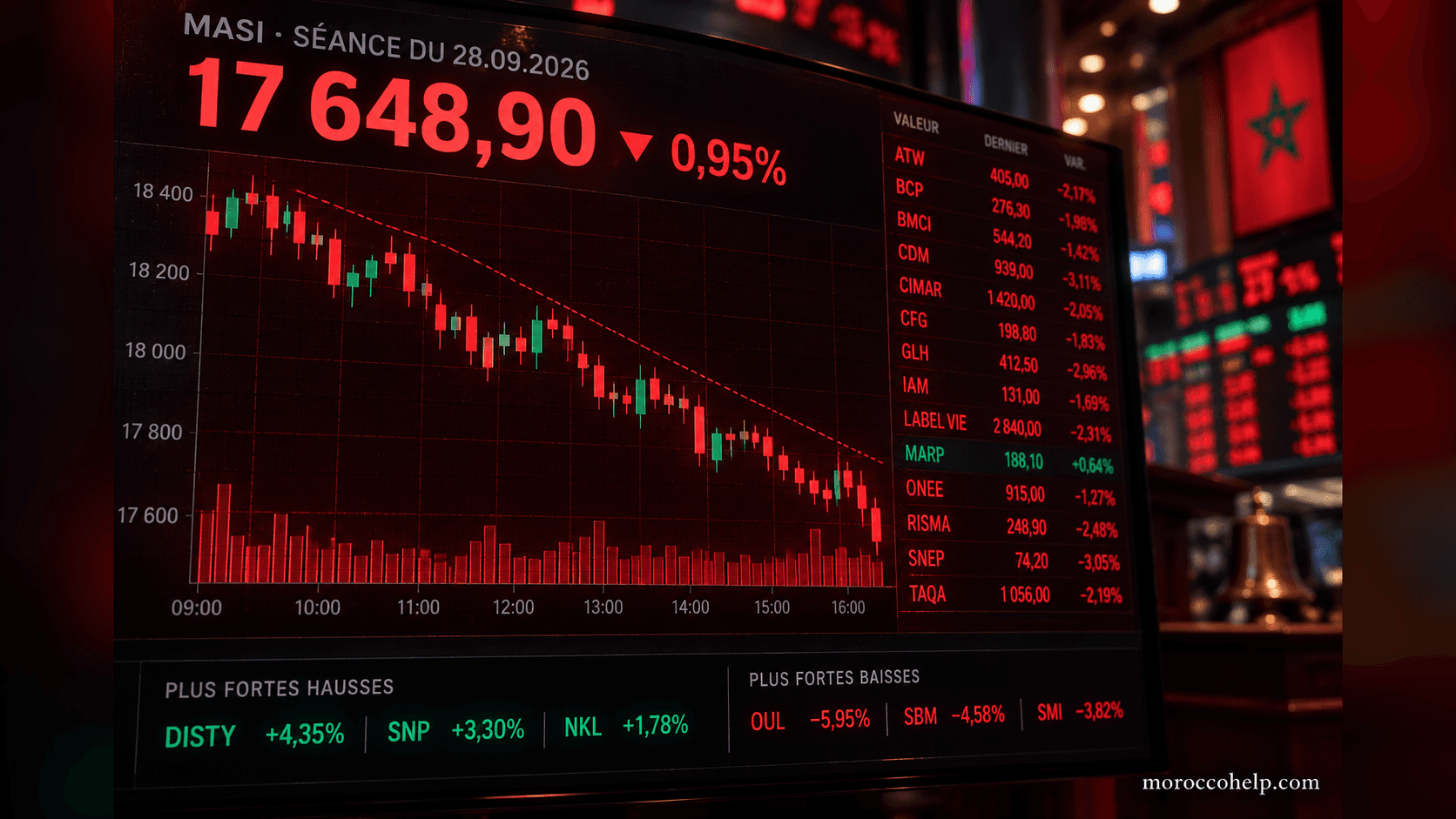
- Casablanca market flows, a calmer equity tape would remove one source of FX pressure after the MASI's difficult week (our brief).
The bottom line
Friday, October 2 was the session where the dirham's quiet September slide turned loud: -1.45% against the euro in a day, the dollar at 9.80, and an energy bill that keeps justifying demand for foreign currency. Inside the band and with reserves at five and a half months of imports, this is an adjustment to a strong-dollar world , uncomfortable for importers, helpful for exporters, tourism and remittances. The week of October 5 will tell whether the drift stabilizes here or extends.
Yassine follows the Casablanca Stock Exchange, Bank Al-Maghrib decisions and Morocco's macroeconomic indicators. He translates market moves into clear, practical takeaways for Moroccan investors and savers.