Category
Moroccan Economy
Moroccan economy news and analysis: GDP growth, inflation, Bank Al-Maghrib monetary policy, the Finance Bill, and what major national decisions mean for businesses, households, and investors.
17 articles about Moroccan Economy

Moroccan Economy
Jet Energy IPO: Casablanca Stock Exchange Raise of 328–375 MDH Opens November 2–5, 2026, First Listing November 16 Under Ticker NRJ
Jet Energy IPO on the Casablanca Stock Exchange: the AMMC approved the prospectus on October 21, 2026 (visa VI/EM/030/2026). The solar subsidiary of Jet Contractors will raise 328.1 to 375.4 million dirhams through a capital increase of 2,625,000 new shares offered at 125–143 MAD in an open price offering (OPO). Subscriptions run November 2–5, 2026, first listing November 16 on compartment Principal F under ticker NRJ. Full detail: company profile, 2023–2030 financial trajectory, 1.5 billion dirham order book, shareholder structure, valuation, BKGR's 170 MAD target price and the points of vigilance before subscribing.
Yassine El Amrani·10 min read
Read article
Moroccan Economy
Morocco's FDI Surge: Why International Investors Are Betting on the Kingdom
Morocco attracted $6 billion in foreign direct investment in 2025, a 73% jump versus 2021, and net FDI flows climbed another 41.8% to MAD 23.3 billion by May 2026. From a $6.4 billion EV battery plant to green hydrogen and aerospace, here is the full map of where international capital is landing, and what still holds it back.
Yassine El Amrani·4 min read
Read article
Moroccan Economy
Morocco's 2027 Budget: 825.6 Billion Dirhams and the Mansouri Government's First Finance Bill
The complete 2027 Finance Bill (PLF) analysis: 825.6 billion dirhams in total charges, 3% deficit target, 400 billion in public investment, 34,454 new government jobs, a 5-year tobacco tax reform, the 2030 World Cup fiscal regime, and how the first Mansouri budget compares to 2026.
Yassine El Amrani·9 min read
Read article
Moroccan Economy
Phosphates: China Closes the Taps, Hormuz Explodes Sulfur Prices: OCP Between Squeeze and Opportunity (October 2026)
Chinese phosphate fertilizer exports are collapsing while the Strait of Hormuz crisis tripled sulfur prices: MAD 27.2 billion of imports in 8 months (+190%). The numbers of an exceptional half-year: OCP posts a MAD 2.84 billion net loss yet holds its EBITDA margin at 28% (vs 9% for Mosaic and 8% for Nutrien), lifts its share of world trade from 28% to 30%, and fights back with TSP and Chinese ammonia. Every figure verified and explained, and what it means for the Moroccan economy.
Yassine El Amrani·8 min read
Read article
Moroccan Economy
Dirham Today: MAD at Multi-Week Lows Against the Euro (11.16) and the Dollar (9.91) (October 5, 2026)
Foreign-exchange brief for October 5, 2026: the Moroccan dirham opens the week at multi-week lows against both basket currencies, 1 euro = 11.16 MAD and 1 US dollar = 9.91 MAD, with Bank Al-Maghrib's fixing at 0.101 dollar per dirham. The dirham has given up roughly 2.9% against the dollar in a week, about 5.6% in a month and close to 8% over the year, pressured by a strong dollar, US yields near 4.7% and Brent around $95. Who wins and who loses as the dirham slides.
Yassine El Amrani·5 min read
Read article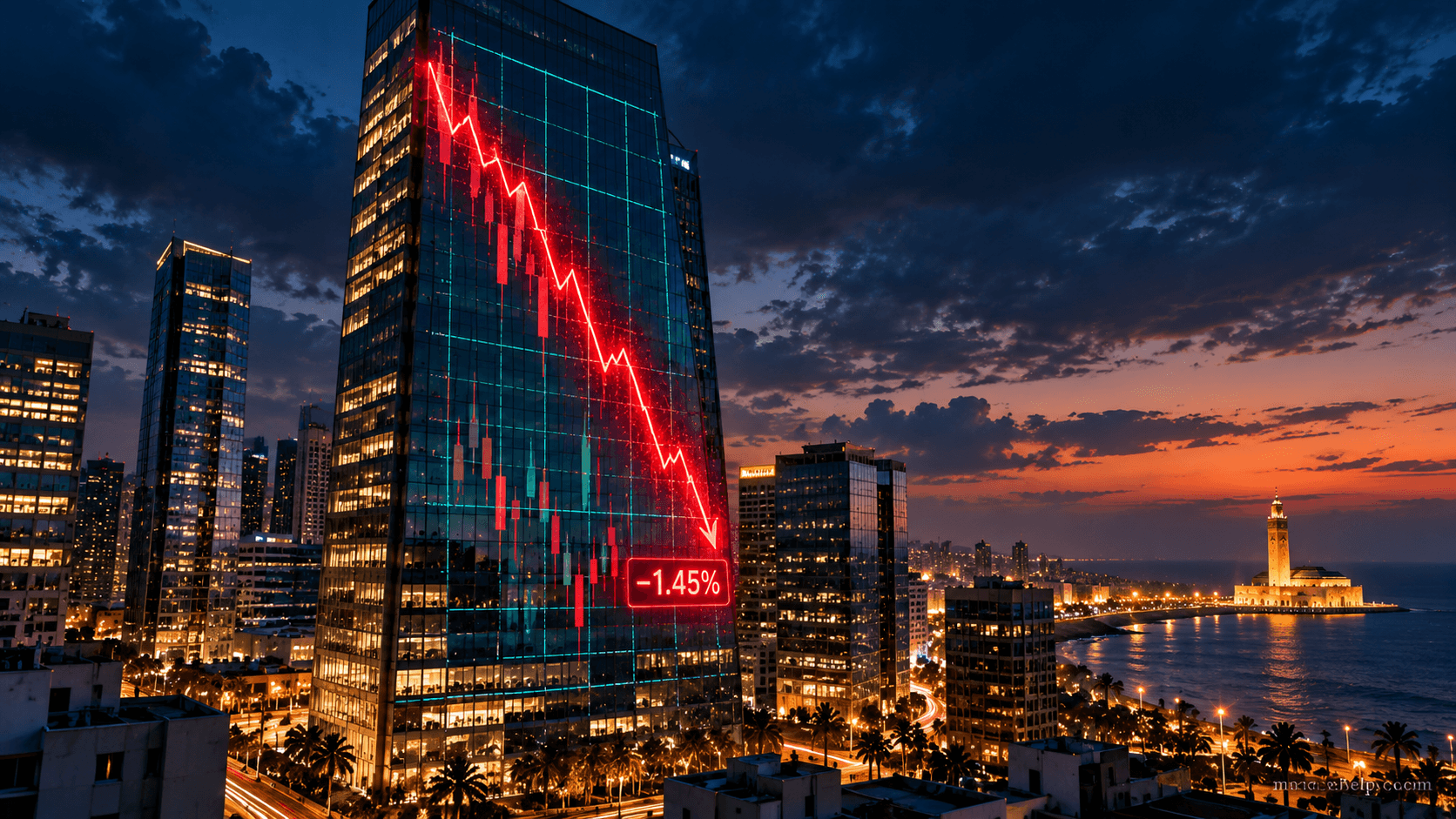
Moroccan Economy
Sharp Session for the Dirham: Euro Jumps to 11.09 MAD, Dollar to 9.80 (October 2, 2026)
Foreign-exchange brief for October 2, 2026: the Moroccan dirham posted its sharpest single-session fall of the streak on Friday, losing about 1.45% against the euro (1 EUR ≈ 11.09 MAD at the close, 11.19 at the intraday lows) while the dollar firmed to 9.80 MAD. Drivers: month-end dollar demand, US 10-year yields near 4.7%, a firm euro and an energy bill inflated by $95 Brent. How the move plays out for importers, exporters, tourism and MRE remittances, and why it is a managed slide inside the BAM band, not a run on the currency.
Yassine El Amrani·4 min read
Read article
Moroccan Economy
Morocco and Global Markets: Key Rate Held at 2.25%, Oil Near $95, Growth Trimmed to 4.4%: the September 29, 2026 Brief
Finance brief for September 29, 2026: Bank Al-Maghrib held its key rate at 2.25% on September 22 while cutting its 2026 growth forecast to 4.4%, inflation is contained at 0.7%, and official reserves are projected at 502.8 billion dirhams by end-2026. Internationally, Brent trades near $95 a barrel, US yields stay elevated around 4.7% and Wall Street endures a nervous September. How these global forces ripple through the Moroccan economy.
Yassine El Amrani·4 min read
Read article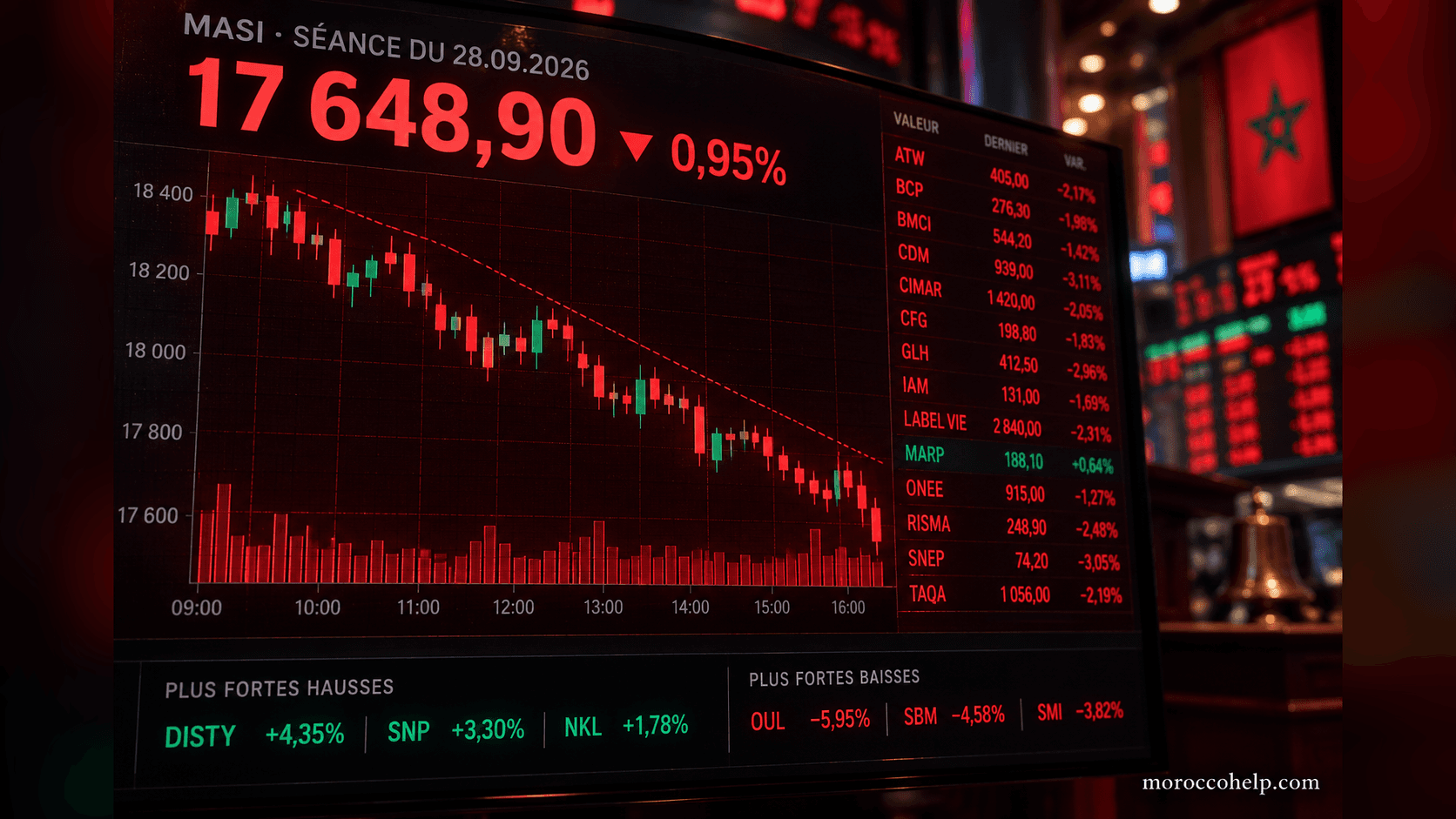
Moroccan Economy
Casablanca Stock Exchange: MASI Closes Down 0.95% at 17,648.90 Points: Monday, September 28, 2026 Session
Casablanca Stock Exchange close for Monday, September 28, 2026: the MASI fell 0.95% to 17,648.90 points, ending at the day's low, taking its year-to-date performance to -6.35%. The MASI.20 slipped 0.71% (-13.93% YTD) on 647 million dirhams of turnover led by Attijariwafa bank and Marsa Maroc. Disty Technologies soared +4.35% after record half-year results. Full session detail: indices, top gainers and losers, mining stocks and MASI.20 futures.
Yassine El Amrani·4 min read
Read article
Moroccan Economy
The Dirham Starts Sliding: Dollar Firms to 9.62 MAD as the Week Opens (September 28, 2026)
Foreign-exchange brief for September 28, 2026: the Moroccan dirham opens the week under pressure, with the US dollar firming to about 9.62 MAD, up roughly 2.9% from its early-September levels near 9.35, and the euro stable around 10.99 MAD. Drivers: a higher-for-longer Fed with 10-year US yields near 4.7%, Brent around $95 inflating the dollar-denominated energy bill, and a Bank Al-Maghrib comfortably on hold at 2.25%. Why this slide is starting, what it means for importers, exporters and remittances, and what to watch this week.
Yassine El Amrani·4 min read
Read article
Moroccan Economy
Morocco 2026 Election Results: PAM Wins with 97 Seats, PJD Quadruples Representation: Official Results
Official results of Morocco's September 23, 2026 legislative election, announced by the Interior Minister at 3:38 AM: the PAM came first with 97 seats out of 395, ahead of the RNI (66) and Istiqlal (65), while Benkirane's PJD quadrupled its representation (54). Final turnout 38.02%. Complete seats-by-party table, the 198-seat coalition math and economic implications.
Yassine El Amrani·11 min read
Read article
Moroccan Economy
Bank Al-Maghrib Holds Its Key Rate at 2.25%: The Council Ruled on September 22, 2026
Meeting on Tuesday, September 22, 2026 in Rabat, Bank Al-Maghrib's Council decided to keep the key rate unchanged at 2.25%. Inflation is forecast at 0.7% in 2026 before rising to 1.5% in 2027, in a context of above-4% growth and a shaky stock market: what this decision means for your loans, your savings and the monetary calendar (next meeting on December 15, 2026).
Yassine El Amrani·5 min read
Read article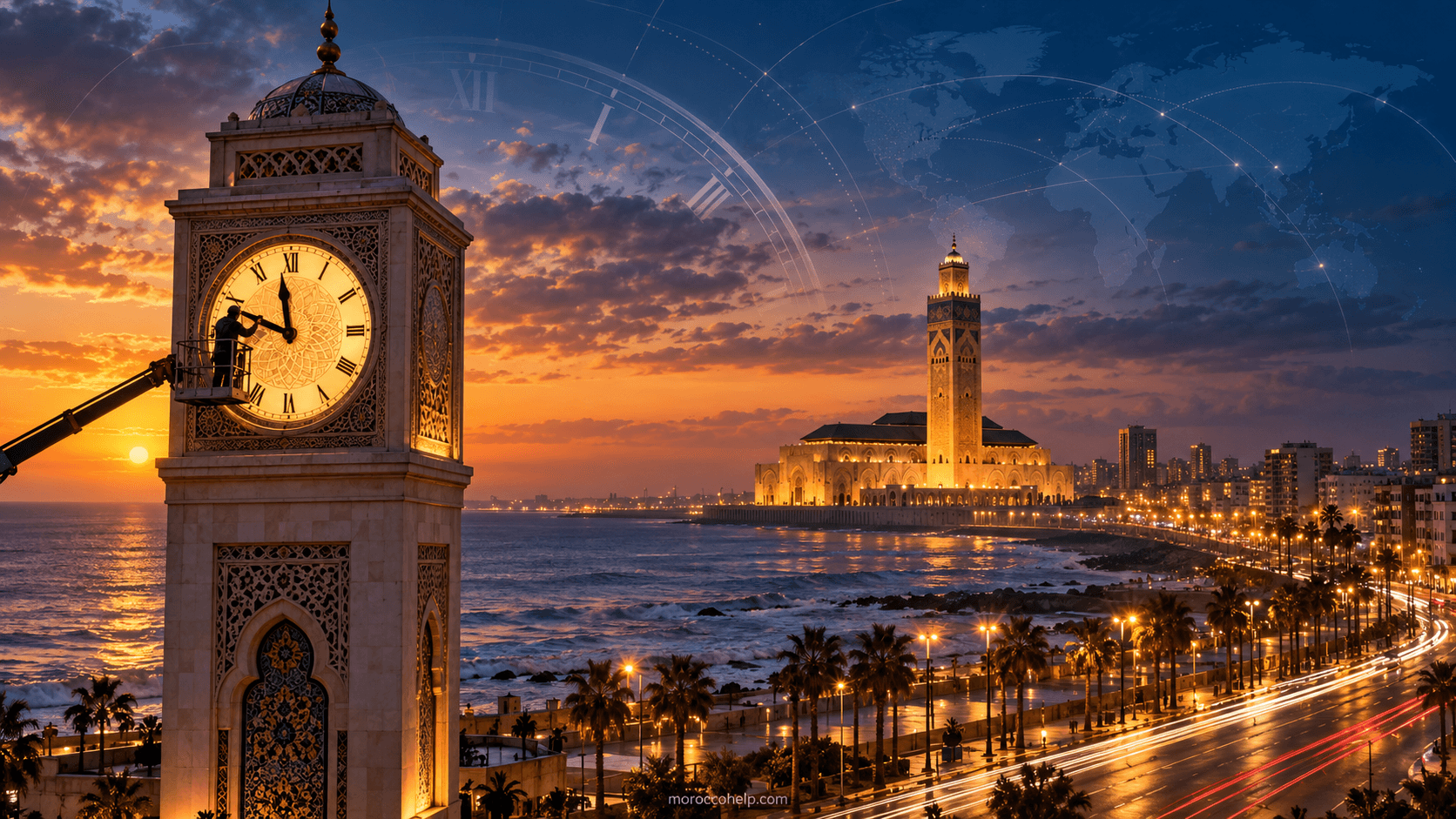
Moroccan Economy
Morocco Returns to GMT: The 360° Impact on the Economy, Energy and Offshoring
As of Sunday, September 20, 2026, 2:00 AM, Morocco has permanently returned to GMT: clocks went back 60 minutes and the country now runs on Greenwich Mean Time. A 360-degree analysis of that missing hour: real energy savings or the 0.17% myth, time gaps with France and Spain, consequences for offshoring and call centers, the Casablanca Stock Exchange, tourism and daily life.
Salah-eddine Bennani·8 min read
Read article
Moroccan Economy
Casablanca Stock Exchange: MASI Suffers Its Worst Week, Losing 5.49% (September 14-18, 2026)
The Casablanca Stock Exchange just lived through its worst week: the MASI fell 5.49% between September 14 and 18, 2026, closing Friday at 17,592.46 points (-2.18% on the day). The numbers behind the correction, why the market is falling while the real economy grows above 4%, and what small investors should (and should not) do now.
Yassine El Amrani·4 min read
Read article
Moroccan Economy
Two-Week Outlook: The Weather Turns and Your Wallet Follows, September 15 to 30, 2026
A forward-looking finance and weather brief for Morocco, September 15 to 30, 2026. The climate pivots over the next two weeks: the September cool-down settles, storms linger over the Atlas and the Saiss, the autumn equinox arrives on the 23rd and the first autumn rains approach. What it means for your food basket, home energy, fuel budget, health spending and trading decisions, with practical advice for households, drivers, small businesses and traders.
Marouan Tazi·6 min read
Read article
Featured
Moroccan Economy
Morocco Finance Watch: Banking Credit, the Dirham and Tourism, September 2026
A practical roundup of Morocco's latest finance news: faster bank lending, foreign-exchange reserves above MAD 500 billion, and strong tourism receipts through July 2026.
Finance Morocco Help·3 min read
Read article
Moroccan Economy
Bank Al-Maghrib Holds Rate at 2.25%: Morocco's 2026 Economic Outlook
At its 23 June 2026 meeting, Bank Al-Maghrib kept the key interest rate at 2.25% for a fifth consecutive time, forecasting 5.2% growth and 1.5% inflation for 2026. What the decision means for mortgages, savings, SME borrowing, and the dirham.
Salah-eddine Bennani·5 min read
Read article
Moroccan Economy
Throne Speech 2026: King Mohammed VI Makes Finance the Engine of Emerging Morocco
Full analysis of the 2026 Throne Speech: 4.9% growth, finance as a national priority, record tourism (20M), Morocco as Africa's #1 auto exporter, and what it means for businesses, SMEs, and investors.
Marouan Tazi·6 min read
Read article