The numbers no longer whisper. Morocco attracted close to $6 billion in foreign direct investment in 2025, a 73% jump versus 2021 according to the Investment Minister, and the momentum did not stop at the new year: by the end of May 2026, net FDI flows had climbed another 41.8% to MAD 23.3 billion. In a region where capital commitments fell more than 40%, the Kingdom is running against the current.
For Moroccan businesses, freelancers and anyone planning to invest, the surge is not an abstract headline. It reshapes the labor market, the dirham's trajectory and the tax base that funds public services. This article maps where international capital is landing, who is sending it, and what still gives investors pause.
The headline numbers
Three figures tell the 2026 story. $6 billion in total FDI for 2025, confirmed by the ministry. MAD 23.3 billion in net inflows by end-May, up 41.8% year-on-year. And second place in North Africa for FDI projects, behind only Egypt, with Morocco punching far above its weight per capita.
The 91% year-on-year surge recorded for 2025 confirmed what analysts had suspected: the post-Covid recovery, the 2023 Marrakech earthquake-response infrastructure push and the World Cup 2030 co-hosting mandate have combined into a single, sustained investment cycle.
Where the money is going
Electric vehicles and batteries
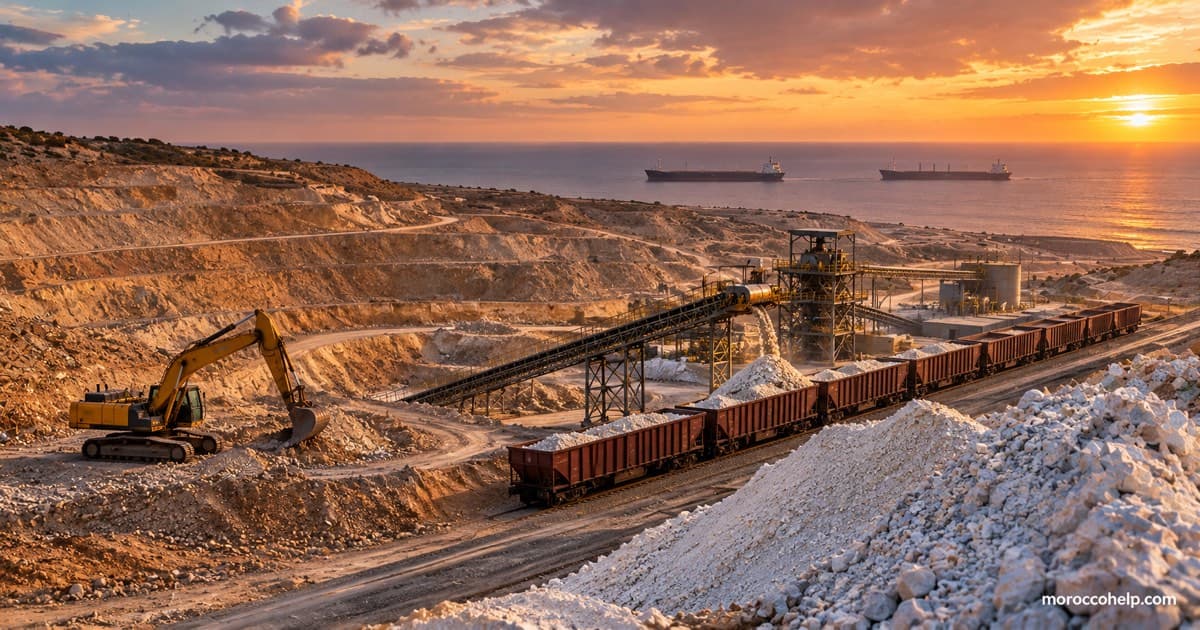
The single largest commitment is a $6.4 billion electric-vehicle battery manufacturing plant, anchoring Morocco's push up the automotive value chain. The Kingdom already produces more than 700,000 vehicles a year for European brands; batteries are the next margin. The plant, alongside smaller gigafactory announcements, makes Morocco one of the few African countries with an end-to-end EV production story.
Renewable energy and green hydrogen
Morocco is targeting $30 billion in energy-sector investment by 2030 to build 10 GW of renewable capacity and LNG infrastructure. The European Investment Bank and Germany's KfW have already committed EUR 300 million to grid expansion, and the green-hydrogen pipeline, with its offer of cheap solar land and proximity to European offtakers, has drawn feasibility studies from dozens of international consortia.
Aerospace and electronics
Tanger and Midparc near Casablanca host more than 140 aerospace suppliers producing wiring, actuators and composite parts for Boeing, Airbus and Safran. Electronics assembly, historically the poor cousin of the automotive cluster, is now growing faster than any other export category.
Who is investing
Germany leads the European charge with EUR 2.1 billion in cumulative FDI across nearly 300 companies, according to bilateral chambers. France remains the largest single source by stock, accounting for over 60% of FDI stock in recent years. The Gulf states, led by the UAE and Saudi Arabia, are increasingly present in renewables, tourism and logistics. And China has quietly become a major player in EV batteries and solar components, attracted by Morocco's free-trade agreement with the United States and its Association Agreement with the EU, which offer tariff-free access to Western markets from Moroccan soil.
Why investors are choosing Morocco
Four structural factors keep coming up in investor roadmaps and ministry briefings:
Political and macroeconomic stability. Inflation is forecast at 0.7% for 2026, among the lowest in the region, and the central bank has held its key rate at 2.25%. Exchange-rate stability, backed by a flexible dirham regime managed against a euro-dollar basket, gives multi-year projects a planning horizon.
Infrastructure. Tanger Med has become the Mediterranean's largest container port. The Al Boraq high-speed rail connects Casablanca to Tangier in two hours. The Nador West Med and Dakhla Atlantic ports extend the logistics map south and east.
Trade access. Free-trade agreements with the US, the EU, the UK and dozens of African countries through the AfCFTA make Morocco a tariff-free manufacturing base for export to more than a billion consumers.
Labor cost and skills. Engineering graduates at a fraction of European salaries, with French, Arabic and increasingly English proficiency.
What still holds investors back
Investor reports are not uniformly rosy. The most-cited obstacles are bureaucratic hurdles in land acquisition and permits, a slow judicial system for commercial disputes, and skills shortages in advanced manufacturing despite the graduate numbers. The 2026 Finance Law attempts to address some of these with greater VAT flexibility for qualifying investment projects and a push to direct capital beyond the saturated Casablanca-Tangier axis, points covered in detail in our companion piece on the 2026 Finance Law roadmap for investors.
What this means for you
If you run a Moroccan business, the FDI surge is your market expanding: international companies setting up locally need suppliers, service providers and subcontractors. If you are a freelancer or auto-entrepreneur, multinationals mean clients who pay on time and value professional invoicing. And if you are considering investing yourself, the same incentives, from the Investment Charter's subsidy framework to the new VAT flexibilities, apply to domestic capital as much as to foreign.
The window is open. The question, as one investor roadmap put it, is not whether to enter Morocco, but how to structure the entry well.
Yassine follows the Casablanca Stock Exchange, Bank Al-Maghrib decisions and Morocco's macroeconomic indicators. He translates market moves into clear, practical takeaways for Moroccan investors and savers.